AI Cost Governance & Enterprise AI Management Platform
Govern, monitor and optimize AI services across models, providers, teams and customer environments.
Jamcracker AI Management Platform (AMP) brings AI service management, usage visibility, policy-driven governance and cost optimization together in one platform. It supports enterprises and service providers managing AI adoption across multiple models and environments.
Request a Demo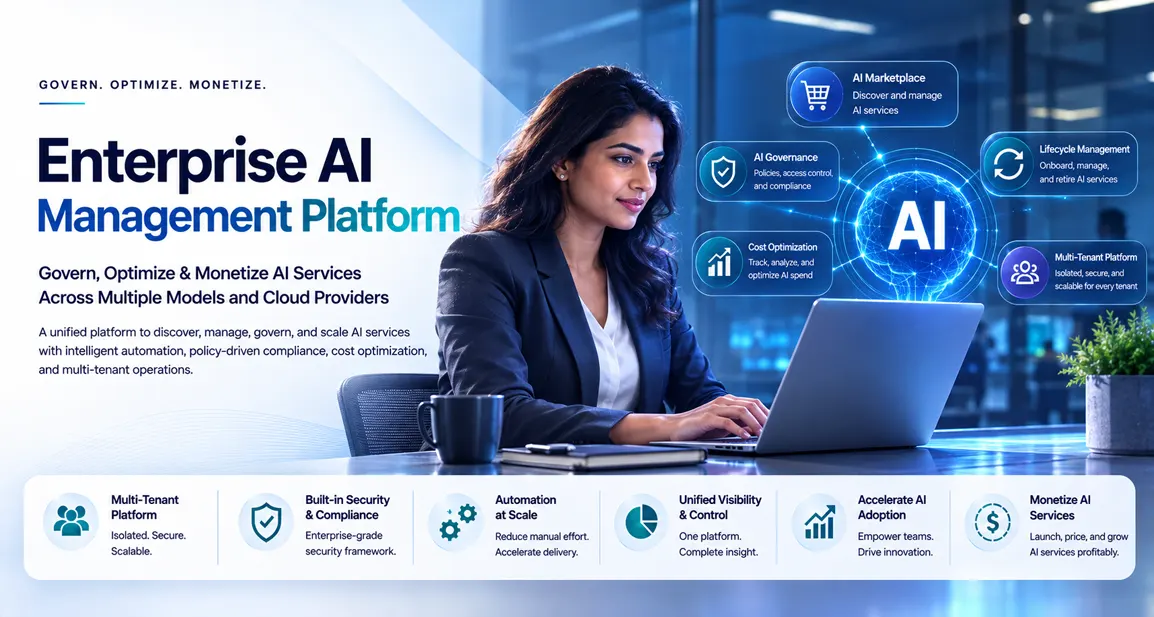
AI Cost Governance and Generative AI Spend Management
As organizations expand their use of generative AI, large language models (LLMs) and AI-powered applications, understanding where AI spend is generated becomes increasingly important. Teams need visibility into consumption, model usage and the policies that govern access to AI services.
Jamcracker AMP helps organizations manage AI services through centralized governance, consumption visibility, policy controls and intelligent model routing. These capabilities can help teams make informed decisions about AI usage, operational efficiency and cost management across supported providers and environments.
AI Spend Visibility: Cost, Consumption and Performance
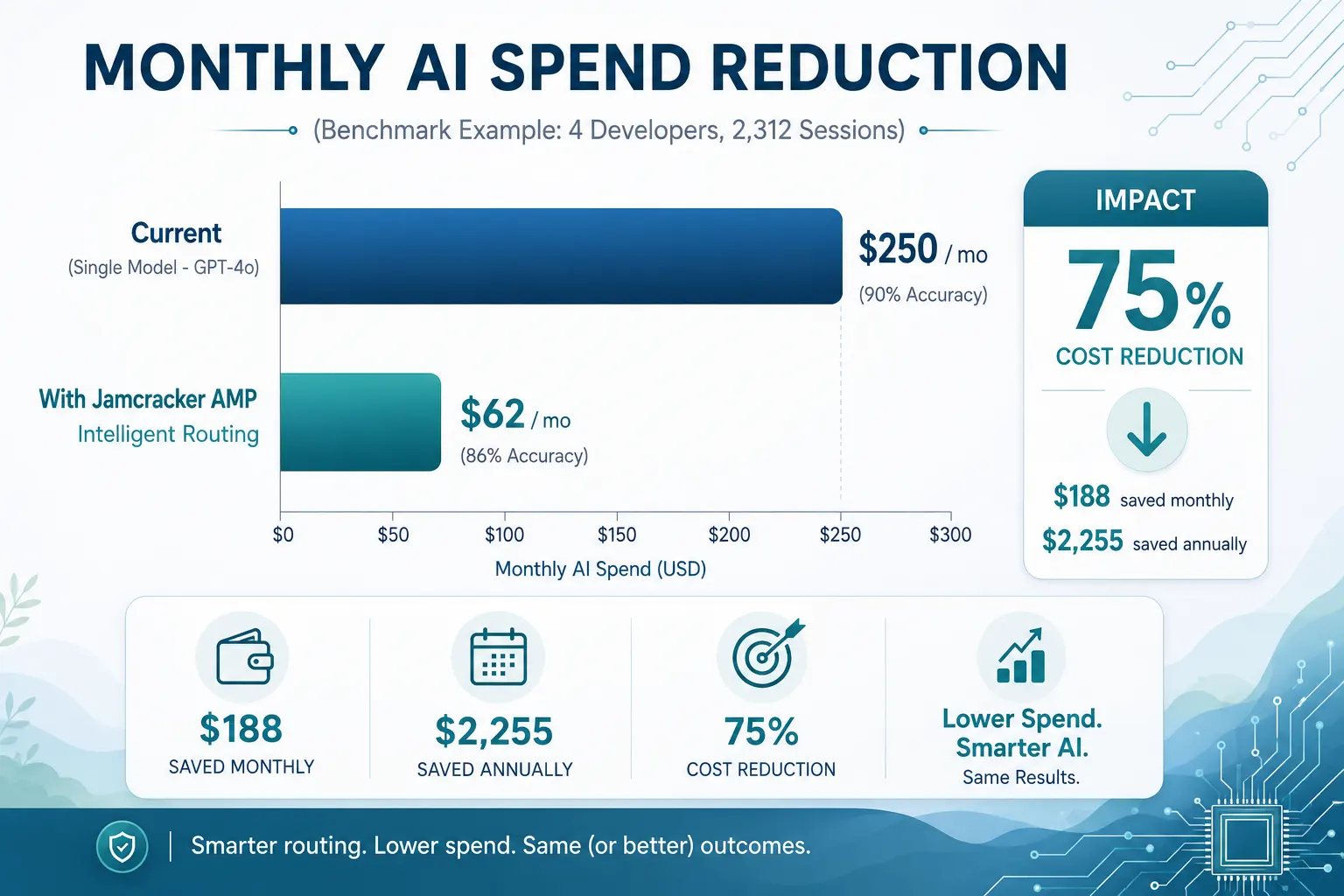
AI cost management starts with understanding how AI services are being consumed. Usage and cost visibility can help teams identify patterns, evaluate model choices and make more informed decisions about workload placement.
Where configured and supported, Jamcracker AMP's intelligent model routing can direct requests to an appropriate model based on defined policies, cost objectives and workload requirements. The goal is to balance cost, performance and response quality rather than defaulting every task to the same model.
Multi-Tenant AI Governance and AI Service Management
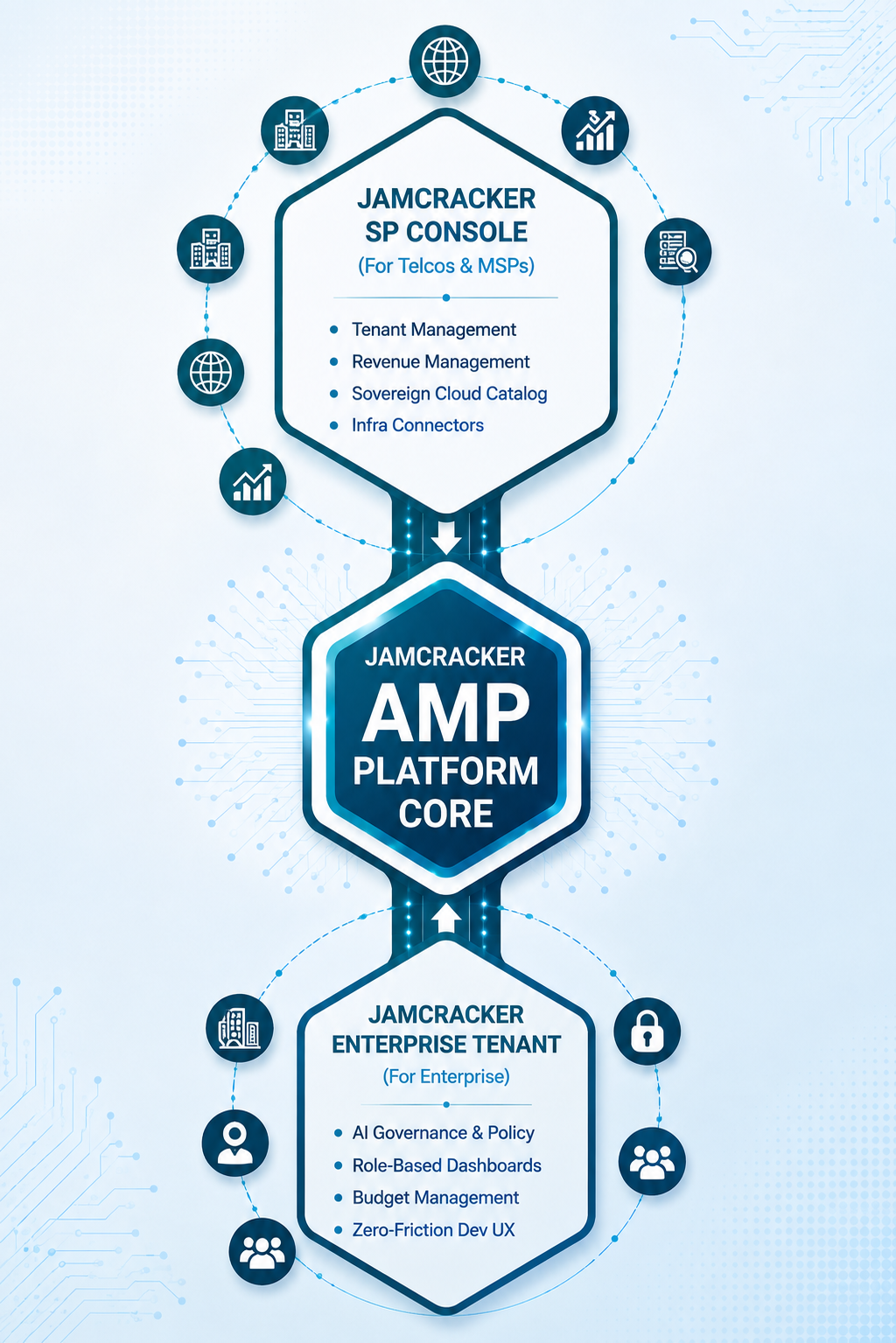
Jamcracker AMP supports enterprise AI management and service-provider delivery through a unified platform architecture. For broader service-provider operations, explore Jamcracker’s cloud service brokerage capabilities. Its role is to help teams manage AI services, policies, consumption and operational workflows across their environments.
For MSPs, CSPs, telcos and system integrators
Service providers can use the Service Provider Console to manage customer environments and AI services at scale. Relevant workflows may include service catalog management, tenant provisioning, usage tracking, subscription management, billing and service monetization, subject to configured product capabilities.
For enterprise IT, FinOps and finance teams
Enterprise teams need to understand which services are being used, how access is governed and how AI consumption aligns with budgets and policies. Jamcracker AMP provides a management layer for supported governance, usage visibility and operational workflows.
For AI platform and engineering teams
Centralized management and supported model-routing workflows can help reduce the operational complexity of managing multiple AI services. Validate provider support, routing behavior and policy controls for each implementation.
AI Cost Governance and Management Capabilities
- AI cost and consumption visibility: Understand usage and cost signals across supported AI services and environments.
- Intelligent model routing: Apply supported routing policies to select models based on workload requirements and cost objectives.
- Policy-driven AI governance: Manage access, usage policies and guardrails in line with configured controls.
- Multi-tenant AI service management: Support service-provider workflows for customer onboarding, service delivery and usage management.
- Service catalog and provisioning: Manage AI services through supported catalog, subscription and lifecycle workflows.
- Usage allocation and billing workflows: Support reporting and service-provider economics where relevant metering and billing functions are enabled.
Governance for MCP-Based Tools and Agentic AI Workflows
As organizations adopt AI agents and connect models to tools and enterprise systems, they need clear policies for access, usage, cost and operational accountability. Model Context Protocol (MCP) is one approach for connecting AI applications with tools and data sources; agentic workflows can involve multiple steps, tools and model calls.
These environments raise important management questions: which AI services are in use, how consumption is managed, which policies apply and how organizations keep AI operations aligned with cost and governance objectives. Explain only the specific MCP and agent-management controls Jamcracker currently supports.
Product validation required: Add claims about MCP server discovery or registry, tool-level permissions, agent-to-agent tracing, per-agent token attribution, PII masking, audit logs or automated rerouting only if those functions are available and demonstrable. Otherwise keep this section educational and do not present these as existing platform features.
Help MSPs and System Integrators Scale AI Service Delivery
System integrators and managed service providers may deploy AI applications, assistants and agents across multiple customer environments. Learn more about cloud services management for telcos and MSPs. As these services scale, teams need repeatable provisioning, clear usage visibility and reliable ways to understand service consumption and operating costs.
Jamcracker AMP is designed to support multi-tenant AI service management and service-provider workflows. Depending on the deployment and enabled capabilities, these workflows can help providers manage customer environments, service catalogs, usage reporting and billing-related operations.
For forward deployed engineers (FDEs) and AI delivery teams, the business objective is to reduce avoidable operational work around deploying and managing AI services. Claims about faster deployment, automatic client chargeback, per-agent cost allocation or measurable FDE productivity improvements should be tied to verified product functionality and evidence.
How Jamcracker AMP Supports Different Stakeholders
| Stakeholder | Relevant platform value |
|---|---|
| CFOs and finance teams | Improve visibility into AI consumption, cost reporting and budget oversight using supported data and controls. |
| IT and AI platform teams | Manage AI services, access policies, usage workflows and supported operational controls. |
| MSPs, CSPs and telcos | Manage customer environments, service catalogs, usage and monetization workflows through the service-provider platform. |
| System integrators and AI delivery teams | Support repeatable AI service provisioning and multi-customer service management. |
| Developers | Use supported integrations and endpoints to access managed AI services. Confirm compatibility with required development tools before deployment. |
Why Use Jamcracker AI Management Platform?
Jamcracker AMP is an enterprise AI management platform for organizations and service providers that need to manage AI services, govern usage and improve operational control across supported models and providers.
- Centralized management: Bring supported AI service management workflows into a unified platform.
- Cost-aware operations: Use available consumption insights and routing policies to inform AI cost decisions.
- Governance and controls: Apply supported access, usage and policy-management workflows.
- Service-provider enablement: Support multi-tenant service delivery and AI service monetization workflows.
- Operational scalability: Standardize supported provisioning and lifecycle processes as AI adoption grows.
Jamcracker AMP at a Glance
| Category | Overview |
|---|---|
| Platform | Enterprise AI Management Platform |
| Target users | Enterprises, MSPs, CSPs, telcos, system integrators and cloud resellers |
| Core areas | AI service management, governance, consumption visibility, model routing, provisioning and monetization workflows |
| Operating models | Enterprise and multi-tenant service-provider environments, subject to deployment design |
| Governance | Supported policy controls, access management and usage oversight |
| Integrations | Supported AI models, cloud providers, enterprise systems and APIs |
| Business objective | Improve AI operational control, cost visibility, service delivery and monetization |
Frequently Asked Questions
What is an AI management platform?
An AI management platform helps organizations manage AI services and related workflows, which may include provisioning, usage monitoring, governance, optimization and lifecycle management across supported providers.
What is AI cost governance?
AI cost governance is the set of visibility, budgeting, policy and accountability practices used to understand and manage AI consumption and spending. The exact controls available depend on the tools and services in use.
How can organizations manage generative AI spend?
Organizations can begin by understanding consumption, identifying the models and workloads generating costs, setting appropriate budgets and policies, and reviewing whether model choices meet their performance and cost requirements.
How does Jamcracker AMP help manage AI services?
Jamcracker AMP provides a unified management layer for supported AI services and workflows, including governance, usage visibility, service provisioning and cost-aware operations.
Can Jamcracker AMP support multiple AI providers?
Jamcracker AMP is designed to manage multiple supported AI models and providers through a unified management approach. Confirm the current supported-provider list with Jamcracker before deployment.
Can MSPs and CSPs use Jamcracker to deliver AI services?
Jamcracker AMP includes service-provider-oriented capabilities for managing customer environments and AI service workflows. Available catalog, provisioning, usage and monetization functions depend on the configured deployment.
What is multi-tenant AI management?
Multi-tenant AI management enables a provider or organization to manage separate customer or business environments through a shared platform while maintaining appropriate separation of access, configuration and usage information.
What is MCP governance?
MCP governance refers to the policies and operational controls used to manage how AI applications connect to tools and data through the Model Context Protocol. Organizations should verify which MCP-specific controls their chosen platform actually provides.
How do organizations govern agentic AI workflows?
Governance for agentic AI workflows can include defining access policies, understanding tool usage, monitoring consumption, establishing accountability and reviewing operational risks across the workflow. Specific monitoring and enforcement features vary by implementation.
How can AI service providers improve delivery efficiency?
Service providers can look for opportunities to standardize provisioning, improve customer-level usage visibility, reduce manual reporting and establish repeatable governance and billing workflows. Productivity improvements should be measured against a documented baseline.